How to Build a Digital Marketing Strategy for a Small Business
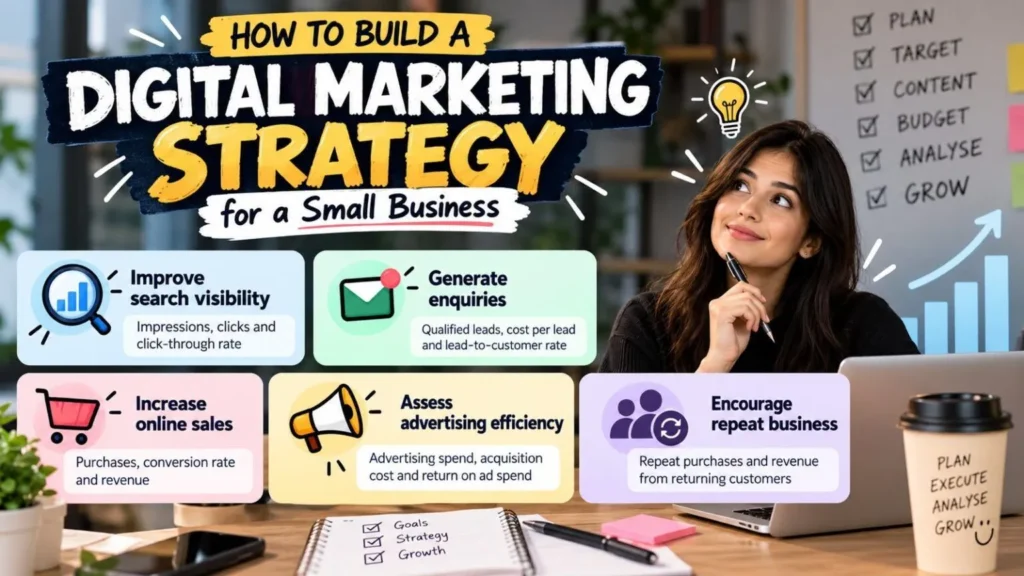
A digital marketing strategy for a small business is a plan for reaching potential customers online and turning that attention into meaningful business results. It connects your business goals with your target audience, marketing channels, budget, content and performance measurements.
You don’t need to advertise on every platform or spend thousands of rupees every month to get started. A small business in Pune can begin by improving its local search presence, publishing useful content or testing a focused advertising campaign. What matters is choosing activities that fit your customers and measuring whether they help achieve your goals.
The process is straightforward: understand where your business stands, identify the customers you want to reach, choose the right marketing activities and improve your approach using actual results.
1. Define Your Business Goals Before Choosing Channels
The first step in building a digital marketing strategy for a small business is deciding what you want marketing to achieve. Without a clear objective, you might spend time publishing social media posts, running advertisements or improving website traffic without knowing whether those activities contribute to sales.
Start by identifying your main business challenge. A new business might need to attract its first customers. An established online store might want to increase purchases, while a service provider might need more qualified enquiries. Turn that challenge into a measurable goal.
For example, a Pune-based digital marketing institute might aim to generate 30 qualified course enquiries in the next month. It could then track how many enquiries result in counselling appointments and admissions. Choose metrics that reflect the goal. Website traffic can help you understand visibility, but qualified enquiries and completed sales provide stronger evidence of commercial outcomes.
Before moving forward, establish three things:
- The objective: What business result do you want to improve?
- The measurement: Which metric will show whether you’re making progress?
- The timeframe: When will you review the results?
Set a target based on your available resources, previous performance and sales capacity. If you don’t have historical data, use the first few weeks to establish a baseline rather than assuming an arbitrary target is realistic.
2. Audit Your Current Online Presence
Before creating new campaigns, examine what your business already has. You may discover that improving an existing website page or fixing a broken enquiry form is more useful than launching another marketing channel. Review your website, social media profiles, Google Business Profile if relevant, existing content and customer enquiry process.
Look for practical issues:
- Are your contact details, services, prices or business hours accurate?
- Can visitors understand what you offer without searching through several pages?
- Does your website work properly on mobile devices?
- Can customers easily enquire, book an appointment or complete a purchase?
- Are you tracking important actions such as form submissions or purchases?
- Which existing pages or channels already attract relevant visitors?
Use available data to understand the starting point. Google Search Console can show how people discover your website through Google Search, while Google Analytics can help you understand activity on the site when analytics tracking is configured.
Don’t assume every business needs a complete website redesign or new advertising account. Fix the problems most likely to prevent customers from finding you, understanding your offer or taking the next step.
3. Research Your Audience and Competitors
Once you understand your current position, identify the customers you want to attract and what influences their decisions.
Start with the information available to you. Speak to existing customers, review common enquiries, examine feedback and identify the questions people ask before buying. If your business is new, conduct a few customer interviews and research relevant search queries.
Consider what customers need, what problems they want to solve, what concerns might prevent a purchase and where they look for information.
For example, an online saree business might find that potential customers want to see fabric details, product photographs, blouse-piece information, delivery timelines and return policies before placing an order. Those insights can guide product descriptions, FAQs and social media content.
Next, examine a few relevant competitors. Review their service pages, offers, content, customer reviews and the way they explain their products. Look for unanswered customer questions or information your business could provide more clearly.
Competitor research isn’t about copying another company’s content or assuming its strategy works because it appears successful. It’s about identifying customer expectations and finding a useful way to differentiate your business.
Use your research to create a clear value proposition: why should a suitable customer choose your business over another option? Your answer might involve convenience, specialist expertise, product selection, transparent pricing or reliable support. Make sure you can substantiate any claims you use.
4. Choose Marketing Channels That Match Your Goals
With your goals, audience and current position understood, choose the channels that make the most sense for your business. You don’t need to use every available platform.

For instance, a local salon in Pune may prioritise local search visibility and customer reviews. A clothing brand may use Instagram to demonstrate products, while a business selling specialised services may focus on SEO and paid search.
These are starting points, not universal rules. The best channel depends on your audience, competition, resources and sales process.
For local businesses, maintain accurate information on Google Business Profile. Google’s official Business Profile help center explains how businesses can manage their information on Google Search and Maps.
Choose one primary channel and, if resources permit, one supporting channel. Give each a defined purpose. SEO might help attract potential customers, for example, while email supports follow-up with people who have agreed to receive communications.
5. Build a Content and Conversion Plan
Choosing a channel tells you where to reach people. Your content and conversion plan determines what they’ll see and what they can do next.
Start with the questions customers ask at different stages of their buying journey. Someone discovering your business may need an explanation of the problem you solve. Someone comparing options may want product details, pricing or evidence of quality. Someone ready to buy needs a clear next step.
For a home bakery in Pune, this might mean publishing content about cake flavours and customisation, explaining ordering deadlines and delivery areas, and providing a straightforward way to request a quote.
Create a manageable content calendar rather than planning more content than your team can produce.

Every important piece of content should have a purpose. A product page should help people evaluate the product. A service page should explain what is offered and how to enquire. A blog post should answer its subject clearly and provide useful next steps.
Make the conversion process easy, too. Check that buttons work, forms request only necessary information and customers know what happens after submitting an enquiry. A campaign can attract relevant visitors and still underperform if the landing page is confusing or the follow-up process is slow.
6. Set a Budget and Prioritise Your Spending
Your budget should reflect your business’s financial position, objectives and ability to convert enquiries into paying customers. There isn’t a single spending a